CONTEXT

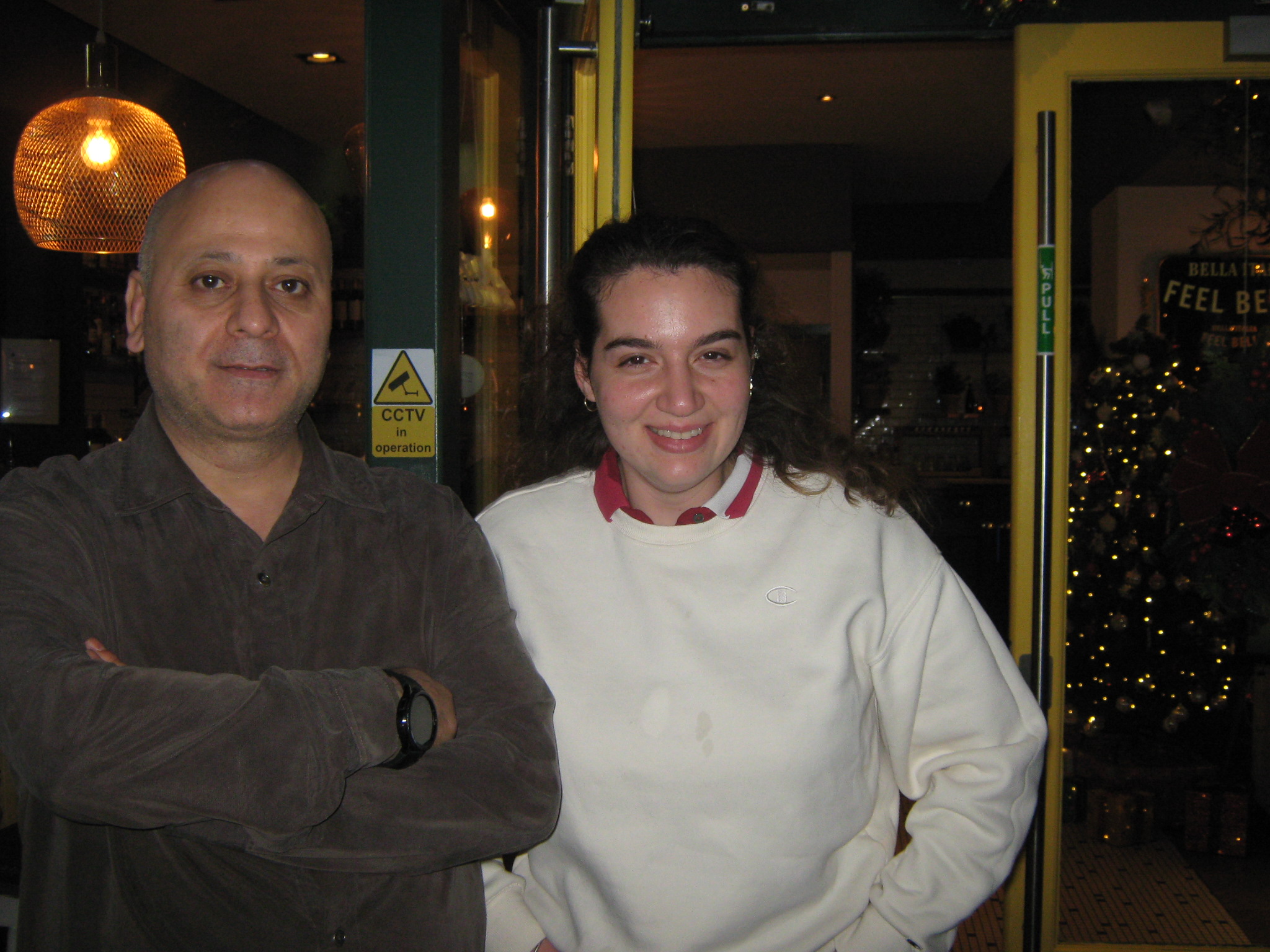
My General Manager Azad Tas and Me

I started working at Bella Italia Paddington as a part-time student during my Master's degree. After six months, I became supervisor, and once I finished my degree, I transitioned to full-time. Being a franchise under Big Table Group meant that all the marketing campaigns and visuals they created were centralized and wasn't always applicable to us.

We're connected to the Indigo and Mercure hotels right next to us, so our customers are different, our service is different.

My manager saw this too and kindly asked if I could help create and recreate visuals for us without losing the brand's tone of voice.
MY ROLE

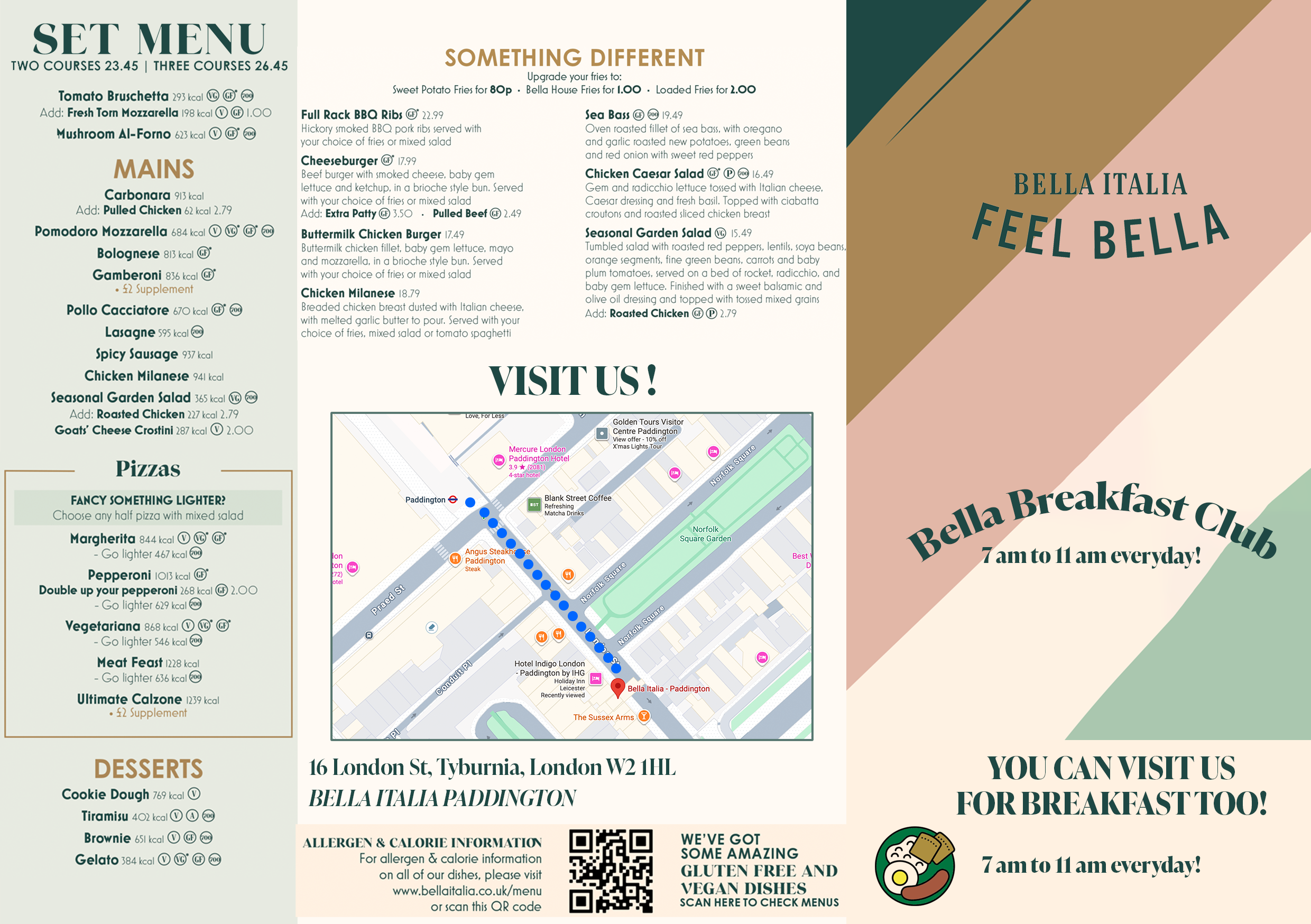
So I became the person solving this. I started creating small versions of our menu in A5 format,  something customers could take with them when they walked in asking about what we serve. I added the map, our address, information about pricing.

We also created something called "Bella Breakfast Club" which isn't really a thing in other Bella locations, but for us it made sense because of those hotel connections next door. We were providing excellent breakfast service that other Bella's weren't.

the problem

But a menu and a concept, they're just the start. I realized we needed to think bigger about what customers actually want from their experience with us. It's not just about the food.

when you go to a restaurant, you're paying for an experience.

Me and my team wanted to make sure that experience was top notch at every level. We needed to engage people more deeply, get them to spend a bit more, and most importantly, know if we were actually delivering that experience they deserved.

So we kept building. First, we created vouchers;
a separate design we'd attach to the menus when we handed them to customers. Little treats for them, a bit of kindness. Desserts, soft drinks, starters...
Things that worked with a main meal, so it encouraged people to order more, but it also brought in different customer groups.

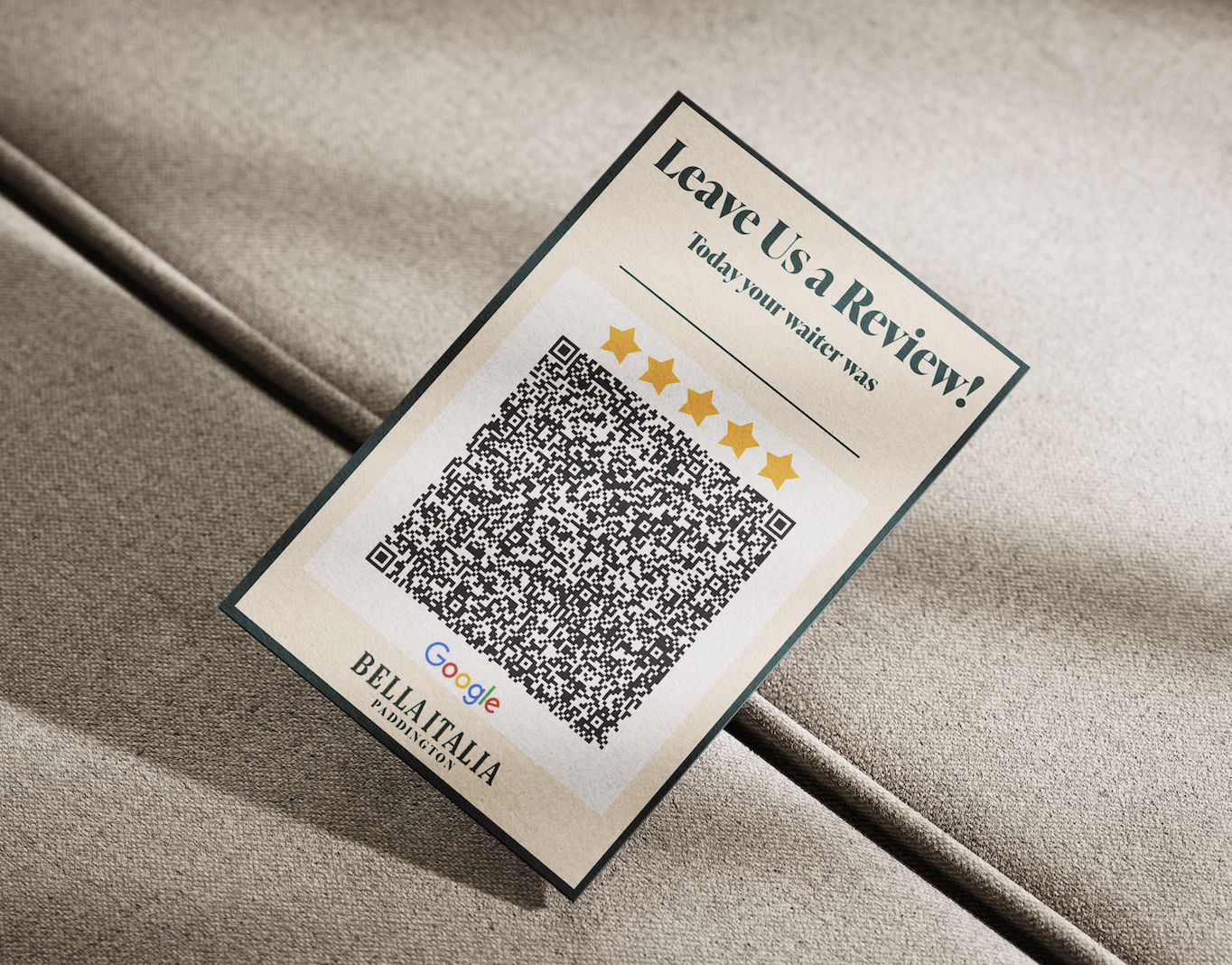
Then we created review cards so we could actually hear what people thought.
We made it easy for them to tell us how we were doing.

It worked. Really worked.
So our operations manager asked if we could do this for his other 8 Bella Italia restaurants and Amalfi too.

AMALFI

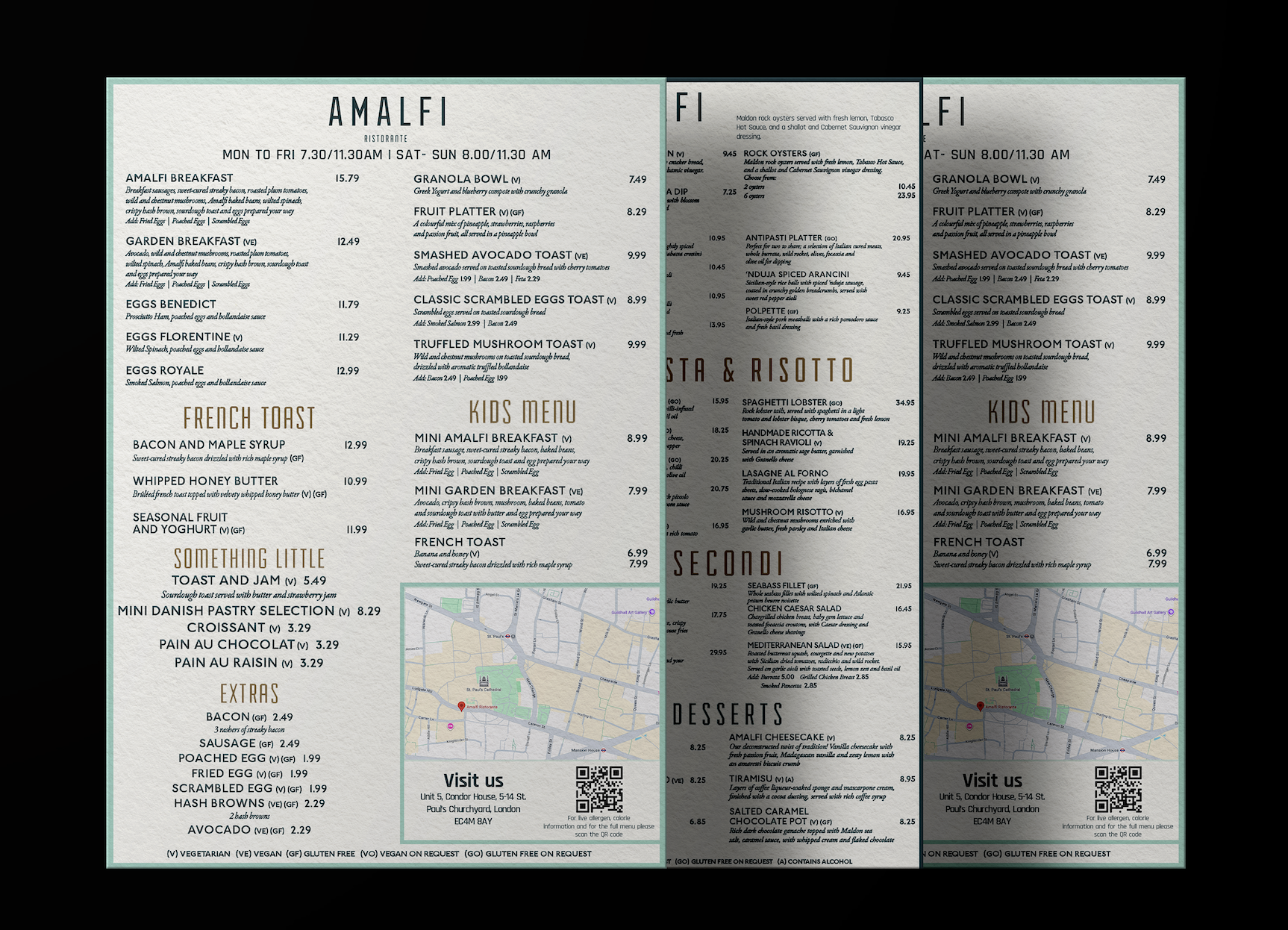
For the St. Paul's branch, we also created small menu versions with breakfast on the back, the location and map.

vouchers, always keeping the exact brand tone and colors we established. But here's what I added: a QR code. Simple thing, but it links straight to Google Maps. Makes it easier for customers to find us, gives them a frictionless way to navigate.

Across the Bella Italia Network

Shaftesbury, Wellington, Jersey, Croydonand beyond...
We built the same system with vouchers and location cards. The template stayed consistent, but every design changed: different address, different map, different phone number. Each restaurant got something made specifically for them, not a generic solution.
This is what I believe design should do; respect the system but honor the individual. Scale without losing soul.

The £9 Lunch Offer

The £9 lunch promotion existed, but it was buried, just a simple billboard somewhere, hard to find on the website, not visible enough to catch anyone's attention. We recognized the real opportunity: weekday lunches were quiet, sales were slow during those hours.

We needed to make this offer impossible to miss. So we recreated it.

Horizontal format so it jumped out when we handed it to customers, A5 friendly so they could take it with them, food photography that made it real. We put it directly in customers' hands during peak foot traffic moments. The goal was simple: fill those empty lunch hours, create volatility during the times when the restaurant needed it most.

What started as solving one location's problem became a framework that worked across the entire network. It taught me that great design isn't about creating something entirely new, it's about understanding what's already working and making it visible, accessible, and impossible to ignore.